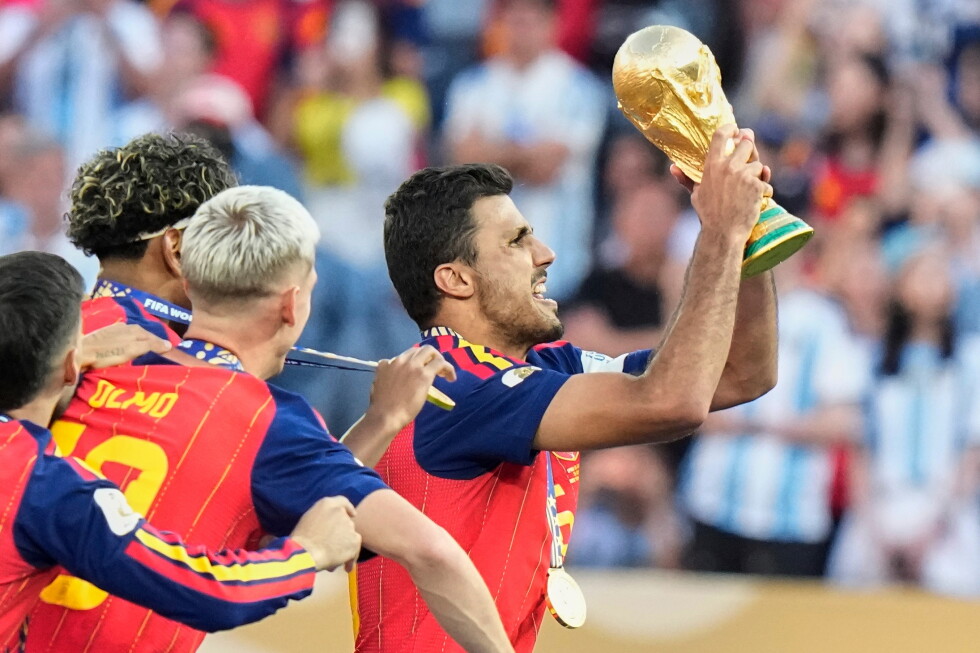
Spain Claims Second World Cup Title in Dramatic Fashion
Spain are the 2026 FIFA World Cup champions, defeating defending champions Argentina 1-0 in a tense extra-time final at MetLife Stadium in East Rutherford, New Jersey. The victory marks Spain’s second World Cup title, following their 2010 triumph in South Africa, and solidifies their status as the dominant force in international football.
Ferran Torres scored the only goal of the match in the 106th minute, latching onto a bouncing ball in the box and smashing a left-footed strike under the crossbar to send the Spanish fans into delirium. It was Torres’s first goal of the tournament — and unquestionably the most important of his career.
“It was a goal scored by 47 million people,” Torres said after the match, referring to Spain’s population.
Spain’s Dominance From Start to Finish
The scoreline suggests a closely fought contest, but the statistics tell a different story. Spain dominated from the opening whistle, taking 20 shots before Argentina managed their first attempt in the second half of extra time. Only a World Cup final-record 12 saves from Argentina goalkeeper Emiliano Martinez kept the defending champions in the match.
Spain’s young stars — Lamine Yamal, Nico Williams, and Pedri — tormented the Argentine defense with their movement and creativity. Yamal, just 18 years old, became the youngest player to start a World Cup final and was a constant threat down the right flank.
“Dibu was nothing short of exceptional,” Spain coach Luis de la Fuente said of Argentina’s keeper. But even Martinez’s heroics could not hold back the Spanish tide forever.
Argentina Reduced to 10 Men
The match turned decisively in Spain’s favor late in regulation when Argentina midfielder Enzo Fernandez was shown a second yellow card for a reckless tackle on Pau Cubarsi. Referee Slavko Vincic had no choice but to send off the Chelsea star, leaving Argentina to play extra time with 10 men.
Tempers flared after the tackle, and tensions boiled over again after the final whistle, with Argentina coach Lionel Scaloni and players from both sides engaging in pushing and shoving on the sideline. But the result was never in doubt once Torres scored — Spain’s airtight defense, which conceded only one goal in the entire tournament, closed out the victory with composure.
Messi’s Final World Cup Ends in Heartbreak
For Lionel Messi, the final was a bridge too far. The 39-year-old, playing what he has indicated will be his last World Cup match, finished the tournament with eight goals and four assists — remarkable numbers for any player. But Argentina’s captain could not find a way through Spain’s defense on the biggest stage.
Messi walked off the field in tears at the final whistle, his dream of a second consecutive World Cup title shattered by a Spanish team that refused to be beaten. He had little time on the ball throughout the match and never seriously threatened Spain’s goal as he has done so many times before.
Spain coach Luis de la Fuente, at 65 years old, became the oldest manager to win a World Cup. His tactical setup nullified Messi’s influence and allowed Spain’s midfield to control the tempo from the first minute.
Historic Achievement for Spanish Football
This World Cup triumph adds to an extraordinary period for Spanish football. Spain becomes the first nation to hold both the men’s and women’s World Cup titles simultaneously, following the women’s team’s victory in 2023. Spain also won Euro 2024, meaning they are the only nation ever to win a European Championship and World Cup in successive tournaments — and they have now done so twice.
Spain is now unbeaten in 38 matches (29 wins, nine draws), the longest unbeaten streak by any European men’s team in history. The previous record of 37 matches was held by Italy — a streak that Spain themselves ended.
Perhaps most remarkably, Spain conceded only one goal across their eight matches in the 2026 World Cup, setting a new record for fewest goals allowed by a champion. Goalkeeper Unai Simon and the defensive pairing of Pau Cubarsi and Aymeric Laporte were immovable throughout the tournament.
Wild Celebrations in Madrid
Back in Spain, hundreds of thousands of fans poured into the streets of Madrid and cities across the country to celebrate the victory. The iconic Plaza de Cibeles — the traditional home of Real Madrid’s celebrations — was transformed into a sea of red and yellow as supporters danced, sang, and set off fireworks well into the early hours of Monday morning.
“I feel pride, to be honest,” de la Fuente said. “Accompanying them on this journey is an honor.”
What’s Next for Both Teams?
For Spain, the future looks exceptionally bright. With Yamal, Williams, Pedri, Gavi, and Cubarsi all under 23, this squad could dominate international football for years to come. The 2026 World Cup may be just the beginning of a golden era.
For Argentina, this likely marks the end of an era. Messi’s international career is expected to conclude after this tournament, and the team will need to rebuild without its talisman. The 2022 World Cup triumph and the back-to-back Copa America titles (2021, 2024) remain remarkable achievements for a generation that will go down in history.
But on this night in New Jersey, Spain reigned supreme — and the football world witnessed the coronation of a new dynasty.