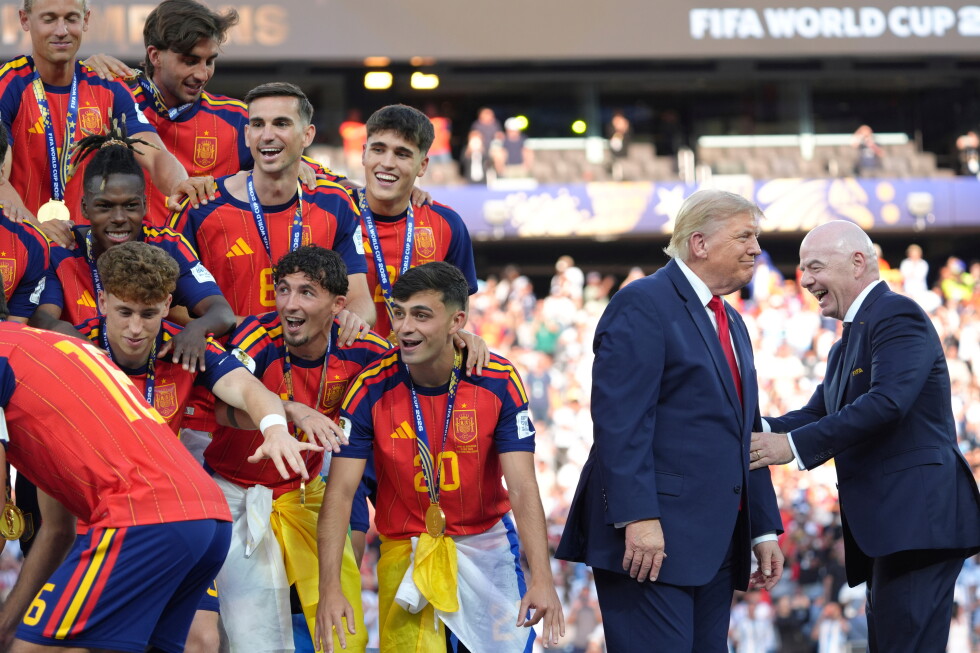
La Roja Clinch Second World Title in Thrilling Final
Spain have been crowned champions of the 2026 FIFA World Cup after a gripping 1-0 extra-time victory over defending champions Argentina at MetLife Stadium in East Rutherford, New Jersey. Ferran Torres etched his name into Spanish football folklore with the decisive goal in the second period of extra time, securing Spain’s first World Cup triumph since 2010.
The final, played on Sunday July 19 before a capacity crowd of 82,500, was a tightly contested affair that showcased the best of international football. Spain dominated possession throughout the match, outshooting Argentina 20-3, but found themselves unable to break through Argentina’s resolute defence during regulation time.
First Half: Spain Dominate but Cannot Find the Net
From the opening whistle, Spain imposed their trademark possession-based style on the game. Midfield maestro Rodri dictated the tempo, completing over 120 passes in the first half alone. Lamine Yamal, the teenage sensation, caused constant problems down the right flank with his pace and trickery.
Argentina, buoyed by the presence of Lionel Messi in what many believed would be his final World Cup appearance, sat deep and looked to hit on the counter-attack. The defending champions had ridden their luck through much of the tournament and once again relied on the heroics of goalkeeper Emiliano Martinez to keep them level.
Martinez produced a stunning save in the 34th minute to deny Rodrigo’s powerful drive from the edge of the box, and again in first-half stoppage time to keep out a header from Aymeric Laporte.
Second Half: Stalemate Continues
The second half followed a similar pattern, with Spain controlling proceedings but unable to find a way past Argentina’s stubborn defence. Pedri and Gavi pulled the strings in midfield, while Nico Williams provided width on the left. However, Argentina defended with discipline and organisation, frustrating Spain’s attackers at every turn.
Spain’s best chance of the second half came in the 72nd minute when substitute Mikel Oyarzabal saw his close-range effort brilliantly saved by Martinez. Argentina’s only real chance came in the 81st minute when Julian Alvarez forced Spain goalkeeper Unai Simon into a comfortable save from distance.
As the clock ticked down, it appeared the match was heading for a penalty shootout, a scenario that would have favoured Argentina and their penalty-saving specialist Martinez.
Extra Time: Ferran Torres Delivers the Decisive Moment
The first period of extra time followed the pattern of the second half — Spain dominating possession but struggling to create clear-cut chances. Then, in the 109th minute, the moment arrived. Dani Olmo picked up the ball in midfield and drove forward, sliding a perfectly weighted pass through to Ferran Torres on the right side of the penalty area.
The Barcelona forward controlled the ball expertly, cut inside onto his left foot, and fired a low shot that deflected off Nicolas Otamendi’s attempted block and nestled into the bottom corner past a despairing Martinez. The Spanish bench erupted, and the thousands of Spanish fans inside MetLife Stadium celebrated wildly.
Argentina pushed forward desperately in the remaining minutes but Spain’s defence, marshalled superbly by captain Rodri and centre-back Laporte, held firm to secure the victory.
Historical Significance and Awards
Rodri was named the tournament’s Best Player after a commanding performance throughout the World Cup, while Kylian Mbappe claimed the Golden Boot for the second consecutive World Cup with eight goals. The tournament, co-hosted by the United States, Canada, and Mexico, was the biggest in history with 104 matches across six weeks.
Spain’s victory also saw them become the first European nation to win the World Cup in the Americas, adding another layer of historical significance to their achievement. The win was celebrated by US President Donald Trump, who presented the trophy to the Spanish team at a FIFA reception at Trump Tower.
What This Means for the Future of Football
Spain’s triumph signals the arrival of a new golden generation. With young talents like Yamal (19), Gavi (21), and Pedri (23) at its core, this Spanish side could dominate international football for years to come. Manager Luis de la Fuente deserves immense credit for blending youthful exuberance with experienced heads to create a balanced and effective unit.
For Argentina and the legendary Lionel Messi, the defeat likely marks the end of an era. At 39 years old, Messi is unlikely to feature in the 2030 World Cup, bringing the curtain down on one of the greatest international careers in football history.
As the football world turns its attention to the 2030 World Cup, which will be hosted by Morocco, Portugal, and Spain, the foundations are firmly in place for Spain to defend their crown on home soil.
Stay ahead of the game with MK Sports — your premier destination for expert analysis, live betting odds, and the latest football news from around the world. Visit MK Sports today for comprehensive coverage of all major tournaments and events.