La Roja Triumphs in Extra-Time Thriller at MetLife Stadium
Spain are the 2026 FIFA World Cup champions. In a gripping final that captivated the globe, Ferran Torres scored a stunning extra-time winner to seal a 1-0 victory over defending champions Argentina at MetLife Stadium in East Rutherford, New Jersey, on July 19, 2026. The triumph marks Spain’s second World Cup title, following their historic 2010 victory in South Africa, and cements the golden generation of Spanish football’s place in history.
The Road to Glory
Spain’s journey to the final was nothing short of spectacular. Under the masterful guidance of coach Luis de la Fuente, La Roja navigated a treacherous knockout path that included victories over tournament dark horses Belgium in the quarter-finals and a commanding 2-0 semi-final win against France. The team’s trademark possession-based football, combined with a rock-solid defence that set a World Cup record with six consecutive clean sheets, proved too much for every opponent they faced.
Goalkeeper Unai Simon was instrumental throughout the tournament, keeping a record-equalling number of clean sheets. His heroic saves became the backbone of Spain’s defensive resilience. At the other end, the attacking trio of Lamine Yamal, Ferran Torres, and Nico Williams terrorised defences with pace, creativity, and relentless movement.
The Final: A Tactical Masterclass
The final itself was a tense, high-quality affair between the two best teams in world football. Argentina, led by the legendary Lionel Messi in what many believed would be his final World Cup appearance, controlled large spells of the game but found Spain’s defence impenetrable.
Both sides created chances in regulation time. Argentina’s Julian Alvarez struck the crossbar early in the second half, while at the other end, Lamine Yamal’s curling effort forced a brilliant save from Argentina goalkeeper Emiliano Martinez. The match remained deadlocked at 0-0 after 90 minutes, sending the final into extra time.
Just as extra time seemed destined for penalties, Ferran Torres produced a moment of magic. In the 106th minute, the Barcelona forward latched onto a perfectly weighted through ball from Rodri, cut inside his marker, and unleashed a clinical left-footed strike that flew past Martinez and into the bottom corner. MetLife Stadium erupted as Spanish players mobbed their match-winner.
“It’s a dream come true,” Torres said after the match. “All the hard work, the sacrifices — it all came together in one moment. This is for all of Spain.”
Controversy Erupts After the Final Whistle
The victory was unfortunately marred by unsavoury scenes after the final whistle. Argentina midfielder Leandro Paredes was involved in physical altercations with Spain players Eric Garcia and Gavi, while captain Rodri was struck in the stomach as he ran past Argentina defender Nahuel Molina. FIFA has since launched a disciplinary investigation into Argentina’s conduct following the match.
Spain coach Luis de la Fuente did not hold back in his condemnation, describing the incidents as “intolerable and unacceptable.” Speaking to Spanish public broadcaster TVE, he said: “I find it intolerable and unacceptable from players of that calibre, whom I had been praising in the days before and who have a magnificent coach.”
Argentina assistant coach Roberto Ayala later apologised for his confrontation with Dani Olmo, describing it as a shove rather than a punch. However, the damage was done, and FIFA’s disciplinary process is now underway with potential sanctions looming for several Argentine players.
Madrid Welcomes Its Heroes
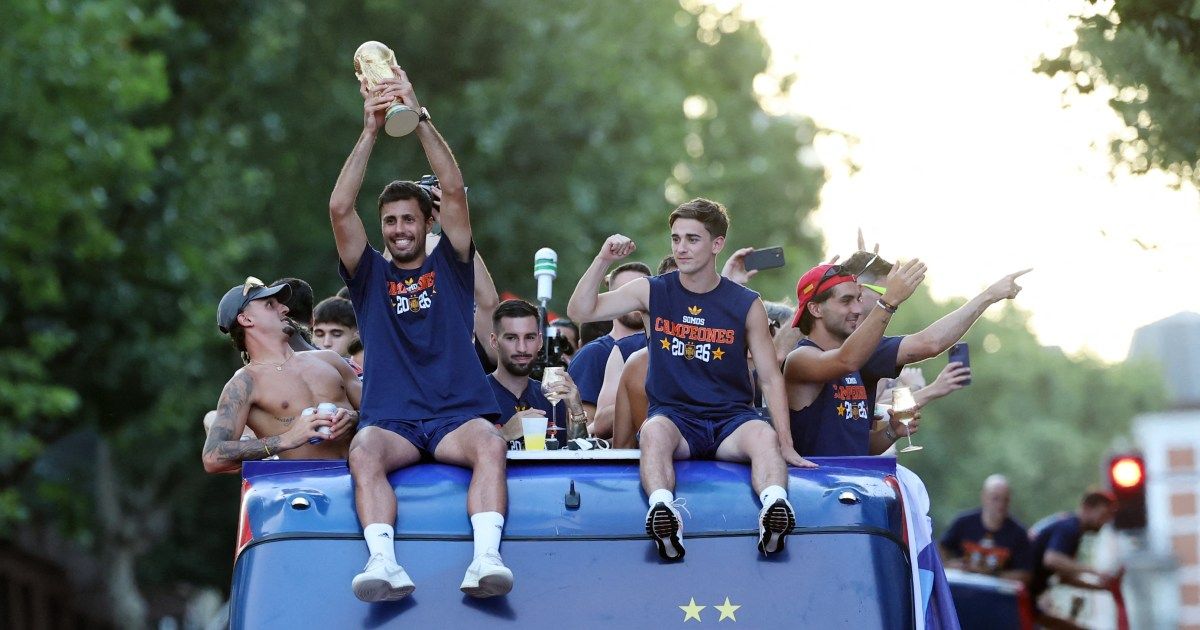
Despite the post-match controversy, the celebrations in Spain were joyous and overwhelming. An estimated two million fans lined the streets of Madrid as the team paraded through the capital on an open-top bus. The squad met with Spain’s royals and Prime Minister Pedro Sanchez before embarking on a raucous journey from Moncloa Palace to Cibeles Square, where 120,000 fans gathered for the official ceremony.
“Thank you to the coaches and players for the style of play, the effort, and the victory,” Prime Minister Sanchez told the squad. “We have truly enjoyed watching you play.”
Players carried the World Cup trophy and wore shirts emblazoned with “Somos Campeones” (“We Are Champions”), dancing and interacting with the ecstatic crowd. Lamine Yamal, at just 19 years old, became the youngest player to win the World Cup since Pelé, adding another remarkable achievement to his burgeoning career.
What This Means for Football
Spain’s victory signals a significant shift in global football dynamics. Their blend of youthful exuberance — embodied by stars like Yamal, Pedri, and Gavi — and experienced campaigners like Rodri and Carvajal proved to be the perfect formula. The tournament also demonstrated Spain’s incredible depth, with contributions coming from across the squad.
For Argentina, the defeat marks a heartbreaking end to what has been a golden era. Lionel Messi, now 39, is widely expected to retire from international football, bringing down the curtain on one of the sport’s greatest careers. The fall-out from the final controversy may also lead to significant changes within the Argentine setup.
As the football world looks ahead to the next World Cup cycle, Spain stands tall as the team to beat. Their combination of technical excellence, tactical discipline, and mental fortitude makes them a formidable force in world football. One thing is certain — Spanish football is back at the very top.
Stay ahead of the game with MK Sports. Get expert analysis, real-time odds, and exclusive betting tips for all major football events. Sign up today for the ultimate sports experience.